

How AI Tools Are Changing Campaign Optimization
Marketing campaigns are becoming smarter, faster, and more precise thanks to rapid advances in artificial intelligence. Instead of relying on manual adjustments and delayed reporting, businesses can now optimize ads, content, and targeting in real time. Many companies working with Brisbane SEO consultants are seeing how AI-driven insights uncover patterns that humans might miss, leading to more efficient budget use and stronger performance. These tools analyze massive data sets, test variations automatically, and continuously refine strategies for better results. Understanding how AI tools are changing campaign optimization reveals why data-powered automation is quickly becoming a cornerstone of modern digital marketing success.
Real-Time Data Processing and Decision Making
AI tools can analyze massive volumes of campaign data in real time. Click-through rates, impressions, conversions, audience behavior, and contextual factors are continuously evaluated. This constant processing allows campaigns to adjust dynamically as conditions change. Instead of waiting for periodic reports, marketers gain access to live performance insights. These systems can recommend or automatically implement changes that improve results while campaigns are still running.
Advanced Audience Segmentation

Traditional segmentation often groups users by broad characteristics such as age or location. AI-driven systems analyze deeper behavioral signals, including browsing habits, content preferences, and interaction patterns. This enables more precise audience segments based on predicted interests and intent. Campaign messages can be tailored to these micro-segments, improving relevance and engagement. More accurate segmentation supports higher efficiency and stronger overall performance.
Predictive Performance Modeling
AI tools use historical and current data to forecast how campaigns are likely to perform under different conditions. These predictive models estimate the impact of budget changes, creative variations, or targeting adjustments before they are implemented. By simulating potential outcomes, marketers can choose strategies with a higher probability of success. This forward-looking capability reduces uncertainty and improves planning accuracy.
Smarter Budget Allocation
Allocating budgets across channels and campaigns is a complex task. AI tools evaluate performance signals and shift spending toward higher-performing segments in near real time. This adaptive allocation helps maximize return without requiring constant manual oversight. Budgets become fluid rather than fixed, responding to changing performance patterns throughout the campaign lifecycle.
Automated Creative Optimization

Creative elements such as headlines, images, and calls to action significantly influence campaign effectiveness. AI systems can test multiple creative variations simultaneously and measure performance at scale. Underperforming versions are deprioritized, while stronger variations receive more exposure. This continuous testing process refines creative assets over time and ensures that audiences see the most effective combinations.
Reducing Manual Workload
AI automation reduces the need for repetitive manual tasks, such as report generation, bid adjustments, and basic testing. This frees marketers to focus on strategic planning, creative development, and high-level analysis. By handling routine optimization tasks, AI tools increase operational efficiency and consistency.
AI tools are transforming campaign optimization by enabling real-time analysis, predictive modeling, automated testing, and adaptive budget management. These capabilities shift optimization from a reactive process to a proactive, continuous one. As AI technology advances, its role in shaping efficient, data-driven campaigns will continue to expand.… Read the rest


 Let’s get one thing clear: short doesn’t equal sloppy. Lazy short-form content, vague sentences, clickbait headings, and hollow claims, get ignored. But strategic short-form? That’s where the win is. You focus on a specific query. You open with the answer. You explain just enough to add weight and leave out everything else. This also allows you to scale more efficiently. Cover five subtopics in five separate



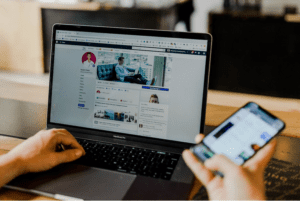 Start by examining your website. Is it user-friendly and visually appealing? Does it accurately convey your brand message? Evaluate the layout, design, and content to ensure if they align with your marketing goals. Next, assess your social media presence. Are you effectively engaging with your target audience on platforms like Facebook, Instagram, or Twitter?
 More and more people are using their smartphones and tablets to browse the internet. So, if you want to make sure your site is visible to as many people as possible, you need to optimize it for mobile.
 Several online directories will list your website if you submit it to them. This can help to increase your site’s visibility and traffic. You should also submit your site to local directories if you own a local business. This way, people searching for businesses like yours in their area will be able to find your site.
 On-page SEO is one of the most significant ranking criteria for Google. This refers to all the things you can do on your website to increase its visibility in search results. Some of the most important on-page SEO factors include:
 As we move into the future, the content will become more and more interactive. It means that instead of just reading or watching a piece of content, audiences will be able to engage with it in various ways.
 Popularized for the first time by TikTok, short videos are now being used by brands and businesses of all sizes to promote their products, services, and even just their overall brand. These videos are usually between 15 seconds and one minute in length, and they’re designed to be highly engaging and attention-grabbing.
 When creating text messages for your marketing campaign, be sure to use clear and concise language. Keep your messages short and to the point. It will ensure that your target audience will read them. In addition, be sure to use keywords relevant to your business.
 Suppose you don’t have the time or resources to create a text message marketing campaign on your own. In that case, you may want to consider hiring a text message marketing service. A good text message marketing service will help you develop compelling messages to reach your target audience. In addition, they can help you track the results of your campaign and make necessary adjustments.
 The first thing that every graphic designer should do is to focus on simplicity. It means that SEO is not something that you should overcomplicate. Make it as simple as possible. The simpler your site and its content are, the easier it will be for search engines to crawl through them and find relevant keywords within them. Moreover, you can make your website easier to navigate and bring more conversions with a simple design. You should also avoid using Flash for SEO purposes, and search engines can’t crawl it. Even if it could work, the crawlers won’t understand what you’re saying – so don’t waste your time on this!
 It would help if you also made the website visually pleasing for your visitors to enjoy the website. Users prefer to look at attractive images and videos rather than reading text blocks. One SEO tip for graphic designers is to think about the type of visuals you can add or use on your website. If possible, you should also include keywords in the image file names while uploading them onto a media library like Flickr. This way, it will be easier for you to optimize SEO for your images.

 …
…